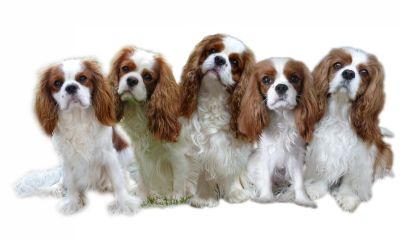
Wug Cavaliers
MOST CURRENT RESEARCH INTO CM/SM
Dr. P.J.J. (Paul) Mandigers - Veterinary Neurologist, Researcher
Articles –
"By screening their CKCS with MRI, breeders in the Netherlands and Denmark reduced the prevalence of SM. The risk of getting affected offspring is clearly reduced if breeders would only use unaffected older CKCS. To reduce the prevalence of SM, we advise all CKCS breeders worldwide, to screen their CKCS with MRI at 3 years of age prior to breeding and exclude all CKCS with an FFC ≥0.5 mm from breeding." published Jan 2024
Dr Mandigers answers the question "can the Cavalier Possibly be SM-Free Within a Few Generations?" "The conclusion: breeders who use only older, unaffected Cavaliers have a much lower chance of producing affected offspring. Conversely, breeders who do not follow this practice have a much higher chance of producing affected (sick) dogs. It is therefore possible to make the Cavalier King Charles Spaniel free of SM." published June 2024

MYXOMATOUS MITRAL VALVE DISEASE (MMVD)
1998 A group of four world renowned veterinary cardiologists, Doctors Andrew Beardow from England, James Buchanan from the United States, Virginia Luis Fuentes from Scotland, and Bruce Keene from the US, and an internationally respected geneticist, Professor Lennart Swenson from Sweden, each presented reports on the results of their professional studies about the disease in 1998 (to the CKCSC,USA). "The disease can be decreased and the age of onset delayed by following guidelines of only breeding cavaliers who are over the age of 2.5 years, have hearts free from MVD murmurs, and have parents whose hearts were MVD murmur-free at age 5 years. No cavaliers should be bred which have murmurs before age 5 years."
These recommendations were adopted by the majority of Cavalier Breed Clubs around the world. It was left up to Breeders to follow or not follow.
Jan 2016 The Danish Protocol
Denmark carried out a 10 year study to implement breeding restrictions on breeding Cavaliers in their country. They found a decrease of over 70% in the incidence of MMVD in the breeding Cavaliers studied. They concluded their mandatory breeding scheme based on auscultation and echocardiography findings significantly decreased the prevalence of MMVD over the 8- to 10-year period. Such a breeding scheme therefore is recommended for CKCS.
Denmark's breeding Cavaliers are ultrasounded at 18months, 4 years and 6 years with auscultations done every year.
2026 If Breeders combine both MMVD protocols, a significant improvement in the heart health of their breeding stock is achieved.
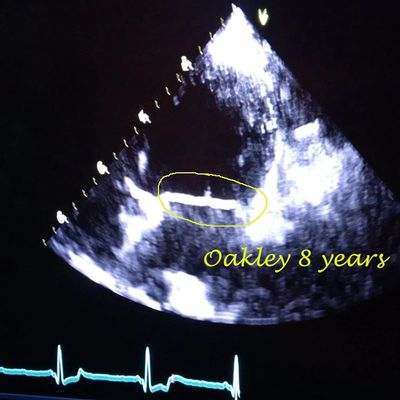
NEBL GENE RESEARCH
Dr. Claire Wade, PhD University of Sydney Geneticist discusses her work with NEBL3
The interest in the NEBL3 gene in connection with MMVD in the CKCS is relatively new. It will take decades to work out any benefit in the Cavalier heart.
Articles –
Dr Wade's research paper "Genetic Variants at the Nebulette Locus Are Associated with Myxomatous Mitral Valve Disease Severity in Cavalier King
Charles Spaniels" published Dec 2022 will explain the discovery of the gene.
June 2025 Dr Wade gave a talk to Cavalier Breeders laying out what was known/unknown up to that point. As a geneticist, she gave Breeders her recommendations on how to use what we know. The Youtube link to the talk is provided, along with the synopsis provided by Cavalier Breeder Megan Jackson.
It is recommended that Breeders continue the current MMVD breeding protocols already listed as they add documenting the DNA status for the NEBL gene in their breeding stock.
HIP DYSPLASIA AND PATELLAR LUXATION
OFA recommendations from their website
Basic OFA Breeding Recommendations
"The following breeding selection criteria have been demonstrated to more rapidly and effectively reduce the frequency of undesirable traits:
Breed only normal dogs to normal dogs—In an examination of 490,966 progeny where both parents had hip conformation ratings, the percentage of dysplastic progeny increased as the sire’s and dam’s phenotypic hip ratings decreased from excellent through dysplastic. Reports suggest equal genetic contribution on progeny hip scores from the sire and dam.
Breed normal dogs that come from normal parents and grandparents—this employs the traditional horizontal pedigree with emphasis on the most immediate three generations (50% genetic contribution from each parent, 25% from each grandparent and 12.5% from each great grandparent)
Breed normal dogs that have more than 75% normal siblings— although many animals in a litter become pets and are not screened for undesirable traits, breeders can utilize the OFA vertical pedigree function to access information about the siblings of dogs being considered for breeding. Breeders can add incentives to purchase contracts in an attempt to gather this information, such as offering reimbursement for a preliminary hip radiograph taken when the pet dog is spayed/neutered.
Select a dog that has a record of producing a higher than breed average percentage of normal progeny—if known, the comparison of production performance between individuals is an important criterion. For example, a stud dog with a track record of producing 90% normal progeny is far superior to another dog producing only 50% normal progeny.
Choose replacement animals that exceed the breed average—exert constant, consistent pressure to ensure overall breed improvement."

EYE CLEARANCES
CAER EYE EXAMS
AKC's National Cavalier Breed club (ACKCSC) established the breed specific testing protocols.
Examiner Requirement
• Must be performed by a Board-Certified American College of Veterinary Ophthalmologists (ACVO) Diplomate (DACVO).
Recommended Examination Schedule for CKCS
• Initial Exam: At 8 to 12 weeks of age (often a litter screening).
• Follow-Up Exam: At 1 year (12 months) of age.
• Young Adults (Ages 2–5): Annually or every 2 to 5 years depending on specific club/registry guidance.
• Ages 6 and Older: Annually (or every two years up to age 9 if not actively breeding; annual if breeding).
• Pre-Breeding: Must have a current exam (within 12 months prior to mating)
Dogs with Juvenile Cataracts, Geographical Retinal Dysplasia, Entropion and Dry Eye should never be bred.
DNA
There are a number of conditions whose DNA status must be known before breeding a Cavalier. The minimum list is:
Episodic Falling, Dry Eye/Curly Coat, Medium-chain acyl-coenzyme A dehydrogenase deficiency (MCADD)
Breeding two CARRIERS together will result in conditions potentially leading to death in Cavaliers. AFFECTED dogs should never be bred. CLEARED BY PARENTAGE is only accepted for two generations (parents & offspring).
Other conditions to check in Cavaliers:
Degenerative Myelopathy, Macrothrombocytopenia, Muscular Dystrophy, MMVD
There are hundreds of DNA tests available to Breeders. Few are specifically developed for Cavaliers. Many have no significance in breeding stock. Having a large number of DNA test results, therefore is not indicative of thorough health testing.